Picture a part on the bench. No label, no part number, no datasheet. The teardown team already knows the comparison it wants to make, but first someone has to answer six questions: What is it? Which model is it? What are its specifications? Who makes it? Who else supplies it? Does a patent protect it?
Those questions look like preparation. In practice they decide how quickly everything after them can move, and they sit directly underneath cost, sourcing and legal decisions.
So the question worth asking is whether benchmarking still pays off for companies that build complex products, and what it costs before it does. The short answer is below, with the evidence and with one test you can run on your next part.
The Hidden Cost of Finding Out What You Are Looking At
Identification rarely appears as a line in a project plan, yet it takes time. The McKinsey Global Institute found that the average interaction worker spends nearly 20 percent of the workweek looking for internal information or tracking down colleagues who can help with specific tasks. The study covers knowledge work in general, not teardown benchmarking specifically, but the pattern will be familiar to any product engineer: the answer exists somewhere, and the hours go into locating it.
What engineers know early carries the most weight. Industry sources often estimate that as much as 75% to 80% of a product’s cost is fixed during design (Siemens Digital Industries Software, Cambridge Network). That makes the information a design team has about competing parts, and when it gets it, a cost question as much as an engineering one.
From One Photograph to One View
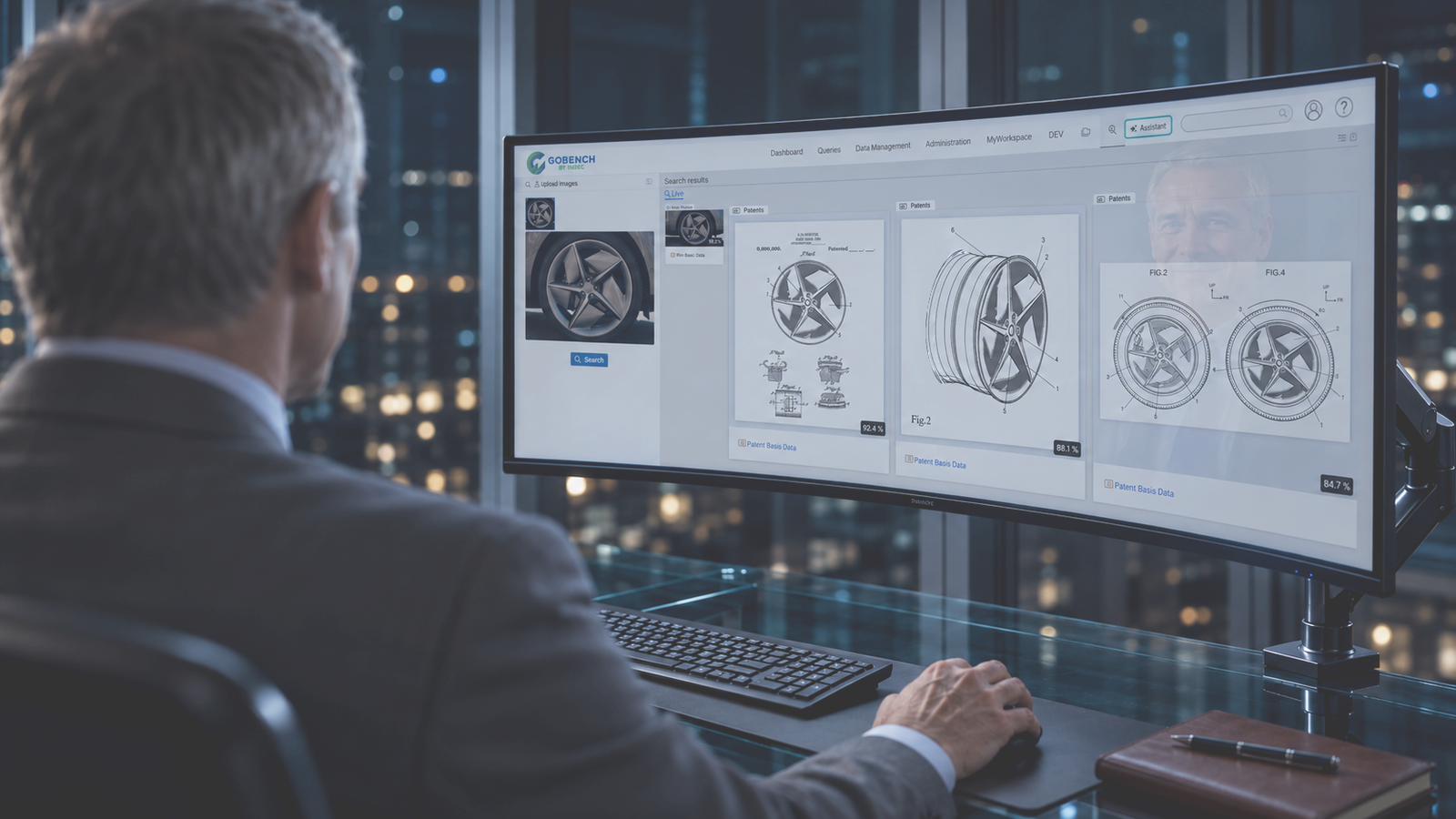
LensSearch, the newest search tool within GOBENCH, is built around that first step. From a single photograph of a part, it isolates the part from the rest of the image, identifies the model and its specifications, matches the manufacturer, and cross-references suppliers in seconds.
Model, specifications, manufacturer, suppliers and patents come together in one view, with every match open to review. LensSearch does the searching; the engineer makes the decisions.
Three Decisions That Start With the Same Part
Once the part is identified, the same information feeds three decisions at once.
- Cost: Teardown and benchmarking turn identified parts into cost insight. In a 13-month programme for a leading automotive manufacturer, KPMG in India ran vehicle teardowns and competitor benchmarking on two platforms, a bus and a multi-utility vehicle, and identified more than 350 cost-saving ideas for each. Cost-reduction potential came to about 8% for the bus and 10% for the multi-utility vehicle, which KPMG reports as potential, not realised savings.
- Suppliers: Once a part is identified, the useful question becomes who else makes or supplies something comparable. Seeing manufacturer and supplier matches next to the specifications lets engineering and procurement work from the same part, in the same view.
- Patents: Patents are a technical library. An EPO-commissioned study reported in 2003 that up to 80 per cent of applied technical knowledge is contained in patent documents, yet most European companies, especially SMEs, did not recognise their value. Patents are also a risk map. WIPO describes freedom to operate as making sure a new product does not infringe others’ rights, and calls patent litigation “an expensive, uncertain and risky affair”. In the US, the AIPLA 2025 survey, as summarized by IPWatchdog, puts median enforcement costs at $600,000 through claim construction and $1 million through appeal, for cases with $1 million to $10 million at risk.
Does It Still Pay Off?
The evidence says yes, and it says where. On cost, KPMG in India found cost-reduction potential of about 8% for a bus and 10% for a multi-utility vehicle, which KPMG reports as potential, not realised savings, so read it as a reason to look closely, not as a promise. On timing, industry sources estimate that as much as 75% to 80% of a product’s cost is fixed during design, so what a teardown reveals is worth the most early. On risk, in US cases with $1 million to $10 million at stake, median enforcement costs run from $600,000 to $1 million, which is the case for checking freedom to operate before launch.
The fourth lever is speed, and it is the one a team controls. Models change, suppliers change and new patents are granted, so a part identified once will be compared again. Robert Camp’s definition of benchmarking rests on one word, continuous, and every hour taken out of the identification step comes back each time the comparison is repeated.
Try It on Your Next Part
Before your next teardown, run a simple test.
- Time your current routine. Note the hours from the part arriving on the bench to a confirmed model, manufacturer, supplier list and patent check.
- Run the same step with LensSearch from one photograph of the part, and compare the clock and the result.
- Put the one-view result in front of engineering, purchasing and legal together, and agree the cost, supplier and patent next steps in the same conversation.
Less time searching. More time building.
Sources
- Joe Flower, We can do better: An interview with Robert Camp, The Healthcare Forum Journal, January-February 1993.
- Chui et al., The social economy: Unlocking value and productivity through social technologies, McKinsey Global Institute, July 2012.
- Gabriella Leone, The 80% rule: Why electronics cost control starts in design, not procurement, Siemens Digital Industries Software, 23 July 2025.
- Warley Design Solutions, Why is Cost Reduction even a ‘thing’ if we make every effort to get the design right?, Cambridge Network, 28 November 2020.
- Case study: helping a leading automotive manufacturer unlock cost reduction opportunities, KPMG in India.
- European companies are failing to exploit patent information, EPO report finds, CORDIS, 6 November 2003.
- IP and Business: Launching a New Product: freedom to operate, WIPO Magazine, 30 September 2005.
- Alex Eveslage, The True Cost of Patent Infringement Litigation, IPWatchdog, 1 October 2026. Sponsored content citing the AIPLA 2025 Report of the Economic Survey.